
TABLE OF CONTENTS
Experience the Future of Speech Recognition Today
Try Vatis now, no credit card required.
Your team finishes a week of customer interviews. The recordings are in English, Spanish, German, and Japanese. Product managers want searchable notes. Marketing wants subtitles for a launch video. Leadership wants a short English summary by tomorrow morning.
At that point, a simple question turns expensive fast: do you need transcription, translation, or both?
Many teams use those words as if they mean the same thing. They don't. If you choose the wrong workflow, you can end up with unusable text, delayed delivery, or a polished output that isn't reliable enough for compliance, research, or quoting. The answer gets even more important when you're handling multilingual audio at scale, because the decision often isn't just transcription versus translation. It's whether to transcribe first and then translate, or use a direct audio translation workflow.
The High-Stakes World of Words
A global research team finishes a round of interviews. The recordings are useful, but only if each stakeholder gets the right kind of output. An analyst may need the original wording preserved for coding and review. A video team may need translated subtitles. An executive may only need a fast English summary.
Those are different jobs, and treating them as the same request creates avoidable cost, rework, and delay.
One job is capture. You turn speech into text so people can search it, quote it, review it, or store it as a record.
The other is conversion. You carry meaning from one language to another so a new audience can understand it.
That distinction is the essence of the difference between transcription and translation. It also shapes a more strategic choice that many teams miss. Should you transcribe first and then translate, or should you translate directly from audio because a full transcript is not needed?
Where teams usually get confused
The confusion usually starts with the output, not the source file. A request comes in for “translation,” but the actual need may be one of several things:
- A searchable record of the original conversation. That points to transcription.
- Subtitles in another language. That often requires both transcription and translation.
- A quick understanding of foreign-language audio. Direct audio translation may be enough.
- A traceable record for compliance, research, or legal review. Transcription usually comes first, then translation if needed.
A practical way to frame the decision is to ask what has to survive from the source. If your team must preserve wording, speaker turns, timestamps, or an auditable record, start with transcription. If your team only needs the message in another language, a direct audio translation workflow can remove a whole step.
That tradeoff matters because the two workflows optimize for different outcomes. Transcribe then translate gives you control, traceability, and a reusable text asset. Direct audio translation can be faster and less expensive when the goal is speed, summaries, subtitles, or broad understanding rather than a formal record.
For teams using AI speech tools, the first workflow usually begins with automatic speech recognition. If you want a plain-English explanation of that layer, this guide to what ASR means is a useful reference.
Practical rule: If the output needs to be searchable, reviewable, or kept as a record, ask for a transcript first. If the goal is understanding across languages as quickly as possible, evaluate whether direct audio translation is the better fit.
Transcription The Foundational Act of Capture
A product manager finishes a customer interview and needs three different things by the end of the day: a searchable record for the research team, verified quotes for marketing, and a clean handoff for colleagues who may later translate key excerpts. That first step is transcription.
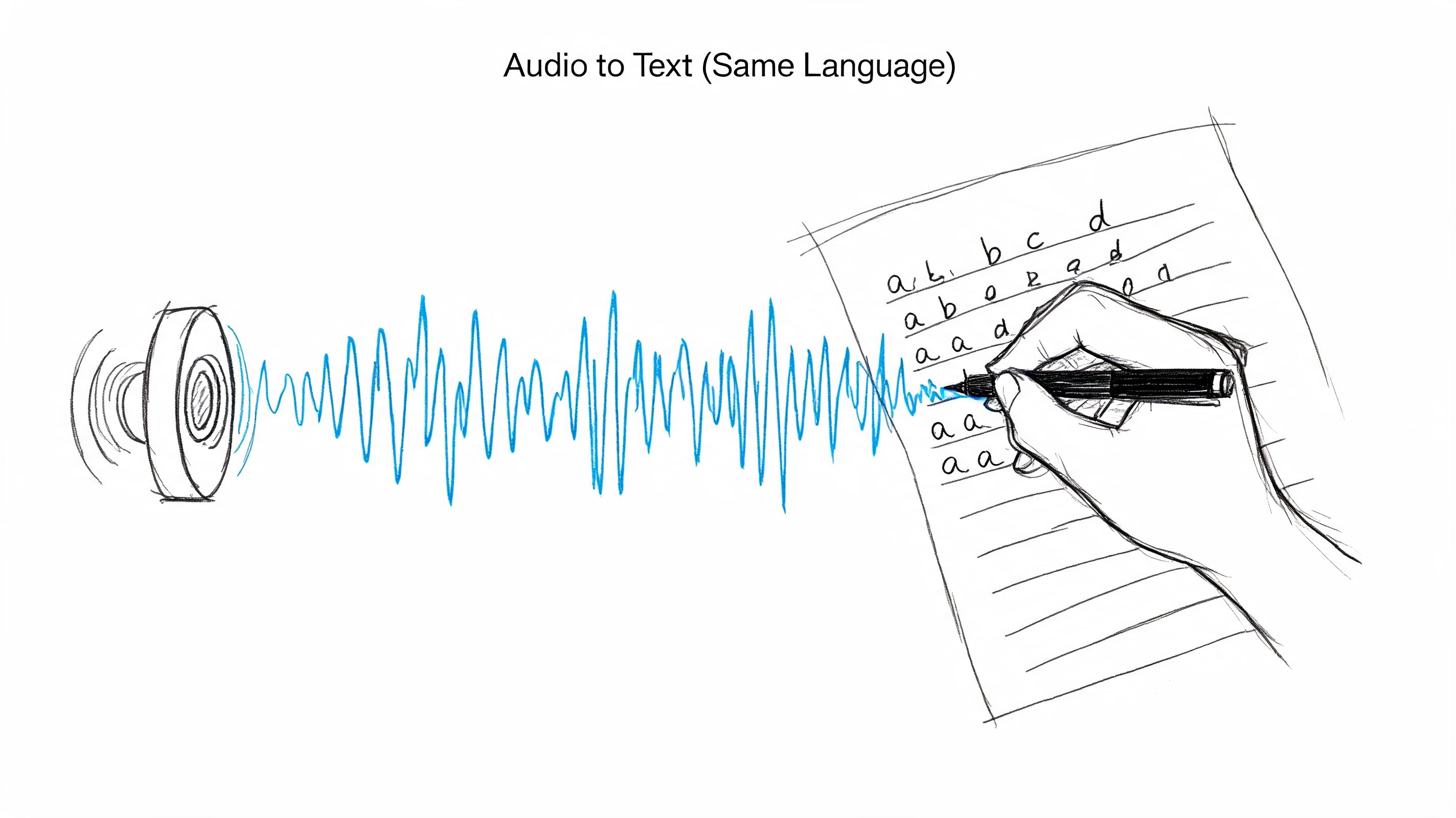
Transcription converts speech from audio or video into written text in the same language. If a physician dictates notes in English and receives written English, that is transcription. If a reporter records an interview in French and needs a written French record, that is also transcription.
The job of transcription is capture. It preserves what was said, who said it, and often when they said it. That makes it different from translation, which changes languages to help a new audience understand the message.
What transcription is trying to preserve
A good transcript gives your team a text version of the original audio with the level of precision your workflow requires. Sometimes that means capturing every hesitation. Sometimes it means cleaning up speech so reviewers can read faster without losing meaning.
Common transcript formats include:
- Verbatim transcription, for close capture of the original wording
- Edited transcription, for cleaner readability
- Timestamped transcription, for fast review against the recording
- Speaker-labeled transcription, for meetings, interviews, and testimony
That level of structure is why transcription often becomes the working source for everything that follows.
A transcript can be searched, annotated, approved, quoted, and archived. Legal teams use it to verify wording. Research teams use it to code themes. Clinical and health data teams often need consistent terminology before they map language into standardized systems such as SNOMED CT. For readers new to that vocabulary, OMOPHub's SNOMED explanation gives helpful context.
Why transcription often sits at the front of the workflow
Teams often assume the question is “transcription or translation.” In practice, the better question is whether you need an intermediate text asset at all.
If the answer is yes, transcription comes first because it creates a stable source. Once speech becomes text, you can review it, redact it, label speakers, correct terminology, and approve it before anyone translates a single line. That control matters in regulated, research-heavy, or high-risk settings.
If the answer is no, a direct audio translation workflow may save time and cost. For example, a global support team that only needs the meaning of a foreign-language call may not need a formal transcript in the source language first.
So transcription is not just a language task. It is a workflow choice.
Choose it when the text itself will have ongoing value as a record, a review layer, or a reusable asset. For teams comparing tools for that job, audio and video transcription software shows the kinds of features that support real production use, such as timestamps, speaker separation, and export options.
If your team needs wording you can search, verify, or keep on file, start with transcription. Then decide whether translation should happen from the transcript or directly from the audio.
Translation The Creative Act of Conversion
Translation means converting content from a source language into a target language while preserving meaning, intent, and context.
If you take a Spanish transcript and turn it into English, that's translation. If you convert spoken Japanese into written English subtitles, that's translation too. The output isn't judged by whether it mirrors each original word. It's judged by whether the new audience understands the same message.
Translation is about meaning, not wording
This is a frequent point of confusion for non-specialists. Good translation isn't word replacement. It is meaning transfer.
That matters because language carries more than vocabulary:
- Idioms don't map neatly from one language to another.
- Tone changes how a sentence lands.
- Industry terms need domain knowledge.
- Cultural expectations affect what sounds clear, formal, polite, or safe.
A direct word-for-word conversion can be technically literal and still be wrong for the audience.
The biology analogy continues
If transcription is like DNA becoming RNA, translation is the next step. In biology, translation uses the RNA message to build a protein. The output is different in form, but it carries forward the original instruction.
The same pattern applies in language work. A Spanish transcript and an English translation are not the same text. They shouldn't be. But they should produce the same understanding.
Why domain context matters more than people expect
Translation gets harder when specialized vocabularies are involved. Healthcare is a good example. A patient note, coding term, or clinical reference may have to align with standardized medical language. If you work around health data models or terminology mapping, OMOPHub's SNOMED explanation is a helpful background resource for understanding why terminology precision matters.
A few practical examples make the distinction clear:
- Meeting notes: A transcript preserves the original discussion. A translation makes it usable for another regional team.
- Video subtitles: The transcript captures dialogue. The translation adapts that dialogue for viewers in another language.
- Support calls: A transcript helps QA review what happened. A translation helps a global manager understand the interaction.
For teams handling multilingual content, Spanish to English translation workflows are a good example of how meaning transfer works in practice when one language needs to become operationally useful in another.
A Detailed Comparison of Transcription and Translation
A project manager reviewing multilingual customer interviews usually faces two different questions at once. Do we need an exact record of what speakers said, or do we need another team to understand what they meant? The answer changes the workflow, the budget, and the deliverable.
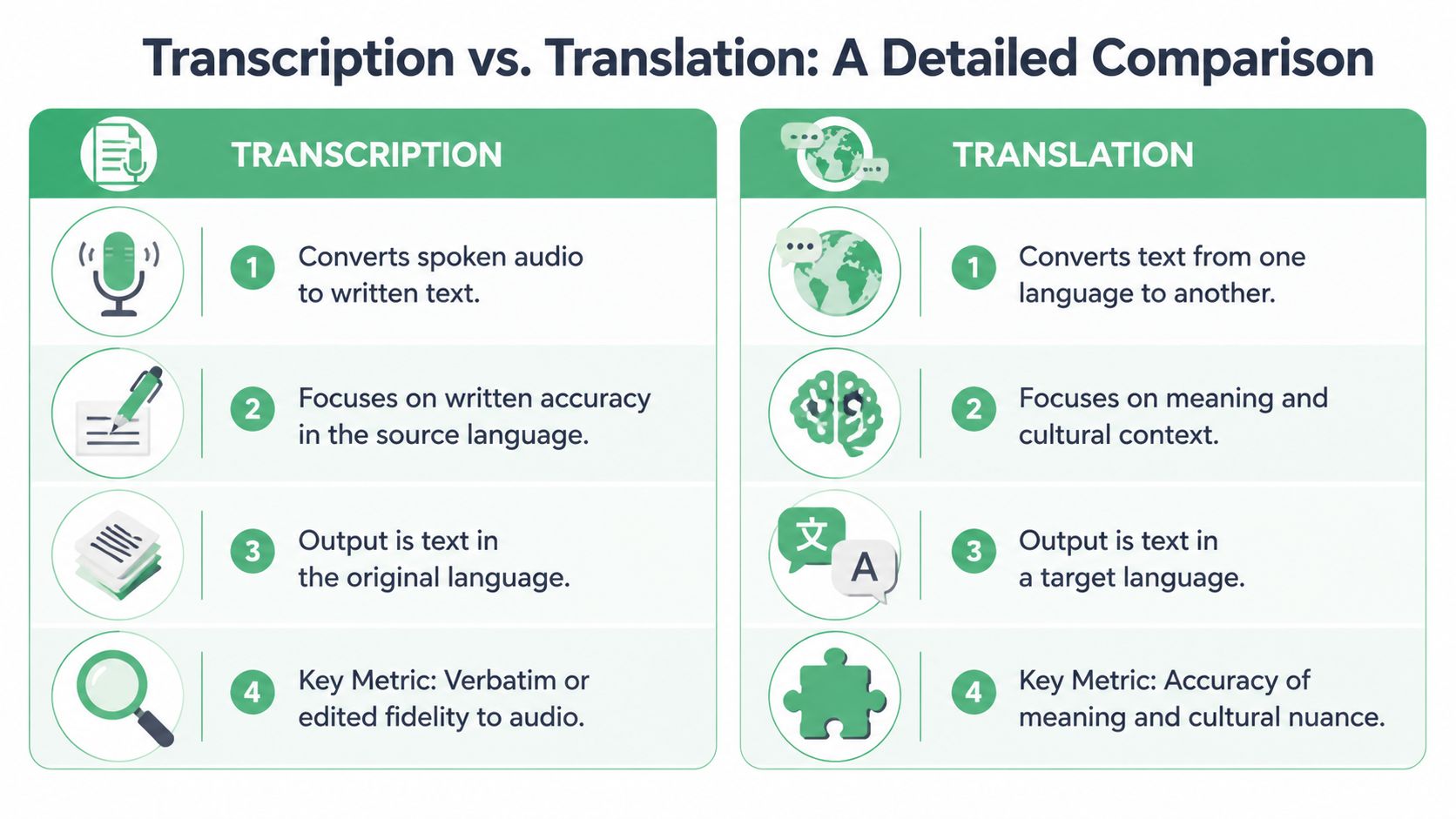
Transcription captures spoken language as text in the same language. Translation converts meaning into a different language. Those sound close, but they solve different business problems.
| Criterion | Transcription | Translation |
|---|---|---|
| Primary purpose | Capture spoken content as text | Convert meaning into another language |
| Source material | Audio or video | Usually text, though it can also start from speech |
| Output language | Same as the source language | Different from the source language |
| Main success question | Did we record what was said accurately? | Did we carry the meaning across clearly? |
| Best for | Records, search, compliance, analysis, captions | Multilingual communication, localization, subtitles, audience access |
| Typical review focus | Wording, speaker labels, timestamps, omissions | Meaning, tone, terminology, readability |
| Common failure mode | Misheard words, missing speech, speaker mix-ups | Literal wording that misses intent or context |
Different outputs, different quality standards
A transcript is judged against the source audio. Reviewers check whether names, numbers, overlaps, and speaker turns were captured correctly. If the audio says, "Ship 15 units on Friday," the transcript should reflect those exact words.
A translation is judged against meaning and use. Reviewers ask whether the target audience will understand the message correctly in their own language, with the right terminology and tone. The final sentence may look quite different from the original because languages organize ideas differently.
That difference matters in operations.
A legal, compliance, or research team often needs a same-language transcript first because the wording itself is part of the record. A sales enablement or executive team may care less about every pause and restart and more about getting a fast, readable version in another language.
Why the workflow decision matters as much as the definition
Many articles stop at the dictionary distinction. The more practical question is this: should you transcribe first and then translate, or should you translate directly from audio?
A transcribe-then-translate workflow works like creating a clean blueprint before building the second version. It gives you an auditable text record, makes review easier, and lets multiple teams reuse the transcript for search, QA, summaries, captions, and analysis. It usually makes sense when accuracy, traceability, or reuse matters.
Direct audio translation skips the intermediate transcript and aims for speed. That can be the better choice for fast internal understanding, live meetings, breaking media, or situations where nobody needs a verbatim record afterward. You save time and sometimes cost because the team is producing one output instead of two.
The tradeoff is control. Without a transcript, it is harder to verify exact wording, resolve disputes, or repurpose the source content later.
A practical test for choosing the right service
Use these questions before you place the request:
- Do you need the original wording preserved for recordkeeping or review? Choose transcription.
- Do you need people in another language to understand the content? Choose translation.
- Do you need both traceability and multilingual access? Use transcription first, then translation.
- Do you only need rapid understanding and no source-language text asset? Direct audio translation may be the better workflow.
Where teams set the wrong expectations
The problem is often not service quality. It is workflow mismatch.
- A compliance team orders translation and then asks why every phrase is not verbatim.
- A marketing team orders transcription and then wonders why the result reads like spoken language instead of polished copy.
- An operations team pays for both outputs when a direct audio translation would have answered the business question faster.
A simple rule helps. If wording is the asset, start with transcription. If understanding is the asset, start with translation. If both matter, design the workflow in that order instead of treating the two services as interchangeable.
When to Use Transcription and Translation in Your Industry
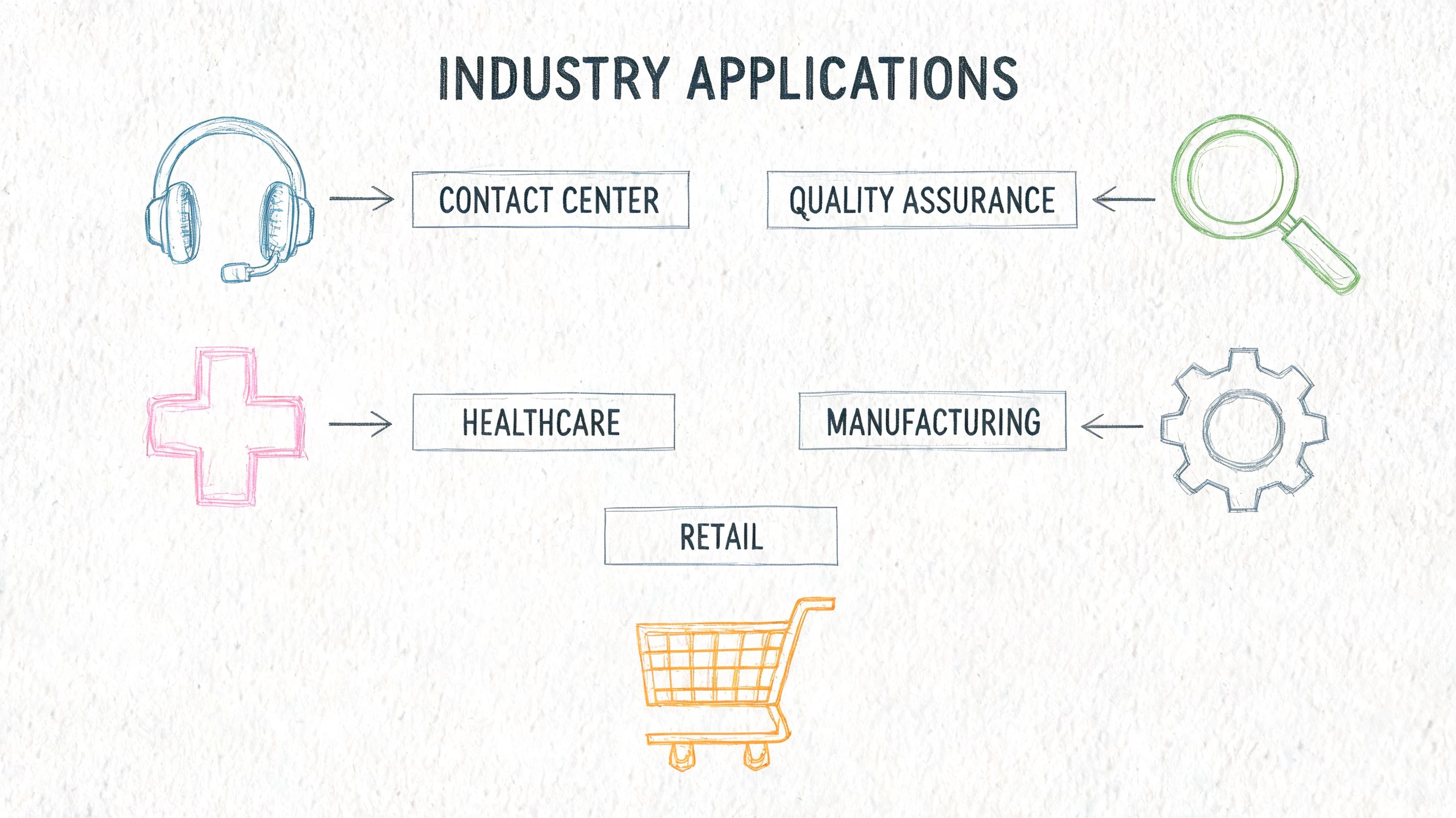
A team records a high-value customer call in Spanish. The quality manager needs to review the exact wording. The VP in another country needs the substance in English by the end of the day. That single file already points to the key decision. Are you preserving source language evidence, delivering cross-language understanding, or doing both in sequence?
The answer changes by industry because the output has to serve a different job.
Contact centers and customer experience
For support, sales, and collections teams, the first question is usually about accountability. If supervisors need to score calls, resolve disputes, check compliance language, or coach agents on phrasing, transcription comes first because the original words are part of the record.
Translation serves a different purpose. It lets managers, auditors, or outsourced QA teams understand calls they do not speak. In many contact center workflows, the strongest setup is not choosing one service over the other. It is deciding whether to build a source transcript first or skip that step and request direct audio translation for rapid review.
A simple rule helps here. If the call might be escalated, challenged, or sampled for formal QA, keep the transcript. If the goal is faster multilingual visibility into call themes, sentiment, or agent behavior, direct translation may be enough.
Media, broadcasting, and journalism
Media teams often need two outputs from the same recording, but not always at the same time. Reporters and producers use transcripts to verify quotes, mark timestamps, and build scripts. Editors use translation to publish subtitles, adapt clips for another market, or brief a team that does not know the source language.
The workflow choice matters more than people expect. An investigative piece usually starts with transcription because quote accuracy is the asset. A breaking-news monitoring team may start with direct audio translation because speed matters more than preserving every spoken filler word from the source recording.
Healthcare and medical operations
Healthcare splits cleanly between record creation and patient communication. Dictation, consult notes, and intake recordings often need accurate same-language capture for documentation. That is transcription work. Patient instructions, follow-up messaging, and support across languages require translation because the goal is understanding, not source-language preservation.
Risk makes the distinction sharper. Internal documentation needs precise capture for continuity of care and review. Patient-facing communication needs meaning that is clear in the patient's language. If a hospital also expects disputes, audits, or chart reviews, a transcript-first workflow gives the team a stable reference point before anything is translated.
Legal and compliance environments
Legal, regulatory, and compliance teams usually need the strongest chain back to the original wording. Depositions, interviews, hearings, witness statements, and recorded disclosures often require a dependable transcript before translation is even considered.
This works like building from a blueprint instead of translating from a moving conversation. The transcript becomes the review surface. Attorneys, investigators, and compliance officers can annotate it, compare versions, and check whether a translated passage reflects the source accurately. Direct audio translation has value for early case assessment or multilingual triage, but formal review usually favors transcription first.
Research, product, and insights teams
Research teams turn speech into evidence they can analyze. Transcripts are useful because tagging, coding, theme extraction, and quote selection all happen faster on text than on raw audio. Translation becomes useful when central stakeholders need to compare findings across markets or when clips and summaries must circulate to executives in another language.
Here, the workflow depends on what the team is trying to learn. If researchers need methodological traceability, source transcripts should come first. If a product lead only needs a fast readout from interviews in another language, direct audio translation can shorten the path from recording to insight and reduce processing costs.
Across industries, the pattern stays consistent. Use transcription when the original wording has operational value. Use translation when access across languages is the goal. Use both, in that order, when your team needs an auditable source record and a target-language output.
Choosing the Right Workflow Transcription First or Direct Translation
This is the strategic question many articles skip.
When teams ask what is the difference between transcription and translation, they usually think they're choosing between two services. In practice, they may be choosing between two workflows.
Workflow one is transcribe then translate
This is the classic sequence. You first create a transcript in the source language. Then you translate that text into one or more target languages.
Choose this when you need:
- An editable source record
- Auditability and review
- Quote verification
- Legal, medical, or research defensibility
- Multiple downstream uses from the same transcript
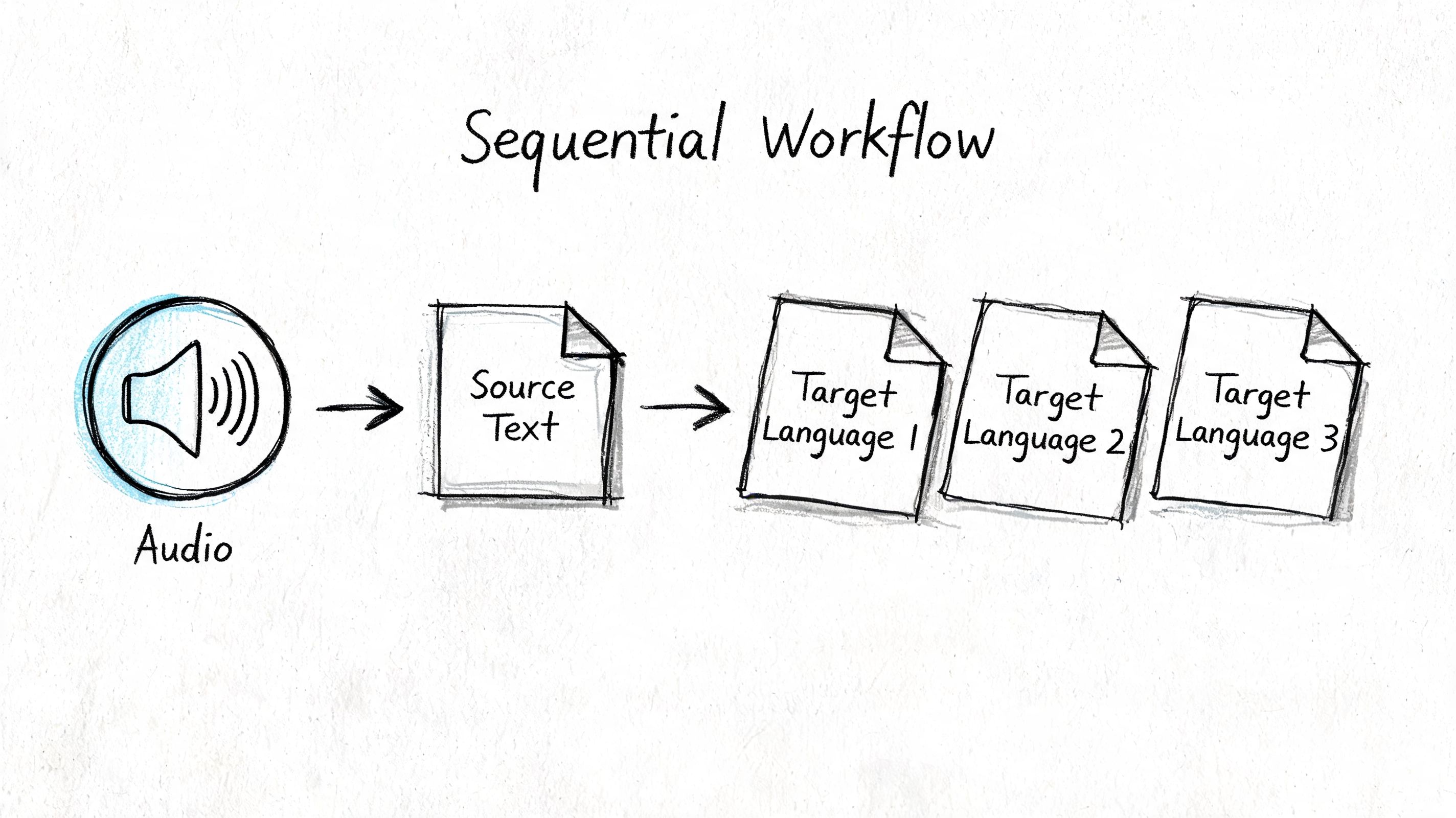
The strength of this model is control. You can inspect the original-language text, clean it up, annotate it, and use it as the authoritative base for everything else.
Workflow two is direct audio translation
In this model, a system translates from speech directly into a target language output without requiring an intermediate editable transcript.
Choose this when you need:
- Fast cross-language understanding
- Live or near-real-time use
- Monitoring rather than archival records
- Lower friction for multilingual streaming workflows
- Fewer steps between source audio and target-language output
Emerging 2025 data indicates that direct speech-to-speech translation APIs can reduce processing time by 40 to 60% and errors by 25% compared with sequential pipelines, according to this workflow comparison.
How to choose in real work
Use this rule set:
If the original words matter later, transcribe first.
That's true for legal records, medical documentation, regulated support calls, and qualitative research.If speed matters more than editability, consider direct translation.
That's common in live monitoring, breaking news, and rapid multilingual review.If multiple teams need different outputs, keep the transcript.
One source transcript can support QA, summaries, captioning, and translation.
The workflow choice isn't about which method is “better.” It's about whether your job is preserving evidence or accelerating understanding.
A lot of wasted effort comes from using a full transcript-and-translation chain when the team only needs fast comprehension, or from skipping transcription when the team later realizes it needs a reliable source record.
Frequently Asked Questions
Below is a practical FAQ for teams building or buying speech workflows.
| Question | Answer |
|---|---|
| Is transcription always in the same language? | Yes. In standard language-services usage, transcription turns speech into text in the original language. Once you change languages, you're in translation territory. |
| Can translation start from audio instead of text? | Yes. A translation workflow can begin with speech. The key issue is whether you create an intermediate transcript or go directly from audio to target-language output. |
| Which is better for real-time apps? | For real-time needs, latency matters. Transcription is often faster, while translation adds more processing because it has to map meaning across languages. If you only need rapid understanding, direct audio translation can be the better fit. |
| When should developers keep an intermediate transcript? | Keep it when users need reviewability, search, redaction, summaries, subtitle editing, or compliance traceability. Skip it only when the product's main job is immediate cross-language understanding. |
| What should API teams evaluate first? | Start with output requirements. Check whether you need streaming support, custom vocabulary, speaker labels, timestamps, redaction, and editable text artifacts. Those requirements usually determine the workflow more clearly than model hype does. |
| Does custom vocabulary matter? | Yes, especially for names, product terms, acronyms, and specialized domains. In practice, vocabulary control can be the difference between a transcript that analysts trust and one they have to repair manually. |
| For subtitles, do I need transcription or translation? | Usually both. You need the spoken content captured first, then adapted into the viewer's language if the audience is multilingual. |
| What's the safest option when requirements are unclear? | Start by preserving the source-language transcript. It gives your team a reusable asset and leaves more options open later. |
For developers, the most useful planning habit is to define the output object before choosing the model path. If your app needs a searchable record, editable captions, or a review screen, design around transcription first. If your app behaves more like live interpretation, optimize for direct translation and low latency instead.
If you're evaluating tools for either workflow, Vatis Tech is worth a close look. It supports high-accuracy speech-to-text, multilingual workflows, speaker diarization, timestamps, captions, and developer APIs, which makes it practical for teams that need to test both transcript-first and direct translation approaches before committing to one.